Fit Logic
Math-driven sizing for a perfect drape. No guesswork, just your measurements.
Bra Logic


Fit Logic
Most brands use "Plus-Four" math to fit more women into fewer manufactured sizes. At The Vera Math, we believe support comes from the ribcage, not a marketing gimmick.
Use the tools below to find your baseline size, then fine-tune your fit using our Sister-Size logic.
Find your true bra size with data-driven sizing across brands.
1. Standard Bra Sizing
Start here. This calculator uses your raw measurements to establish your true baseline.
It removes the guesswork and provides the standard size your body actually requires for proper lift and health.
2. The Adjustment: Sister-Sizing
(Need a tighter band)
For the "Riding Up" fit. If your current band feels loose or slides up your back, but the cups feel perfect, you need a tighter band.
This tool calculates the exact size that maintains your cup volume while increasing the band’s anchor strength.
3. The Adjustment: Sister-Sizing
(Need a looser band)
For the "Can't Breathe" fit. If your band is digging in or feels restrictive, but you aren't spilling out of the cups, you need more room in the back.
This tool finds the sister size that gives you breathing room without sacrificing the fit of the cup.
Understanding Volume Groups
(The Sister-Size Secret)
In Bra Logic, a 'D' is not always a 'D.'
As the band size changes, the cup letter must shift to keep the volume consistent.
How to Read This Chart
The Rows: Each "Volume Group" represents a physical amount of space. Every size in that row holds the exact same amount of volume.
The Bolded Size: This is the Baseline Anchor for that Volume Group. The 36-band (or the nearest equivalent) represents the middle of the standard retail grade. It shows how the math "fans out" in both directions.
The Size Shift: If you move Left, the band gets tighter and the cup letter increases. If you move Right, the band gets looser and the cup letter decreases. The total volume of the cup, however, remains the same.
Volume Group 1 30B — 32A — 34AA — 36AAA
Volume Group 2 30C — 32B — 34A — 36AA — 38AAA
Volume Group 3 30D — 32C — 34B — 36A — 38AA — 40AAA
Volume Group 4 30DD — 32D — 34C — 36B — 38A — 40AA — 42AAA
Volume Group 5 30DDD/F — 32DD — 34D — 36C — 38B — 40A — 42AA — 44AAA
Volume Group 6 30G — 32DDD/F — 34DD — 36D — 38C — 40B — 42A — 44AA
Volume Group 7 30H — 32G — 34DDD/F — 36DD — 38D — 40C — 42B — 44A
Volume Group 8 30I — 32H — 34G — 36DDD/F — 38DD — 40D — 42C — 44B
Volume Group 9 30J — 32I — 34H — 36G — 38DDD/F — 40DD — 42D — 44C
Volume Group 10 32J — 34I — 36H — 38G — 40DDD/F — 42DD — 44D
Volume Group 11 34J — 36I — 38H — 40G — 42DDD/F — 44DD
Volume Group 12 36J — 38I — 40H — 42G — 44DDD/F
Apparel Fit
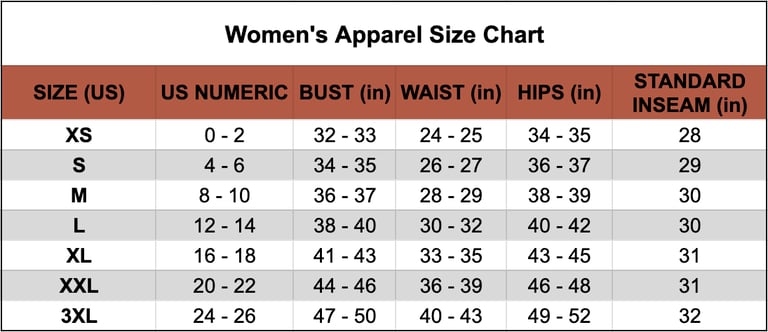
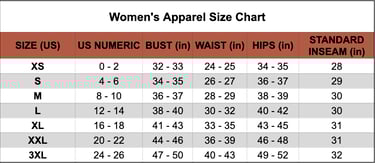
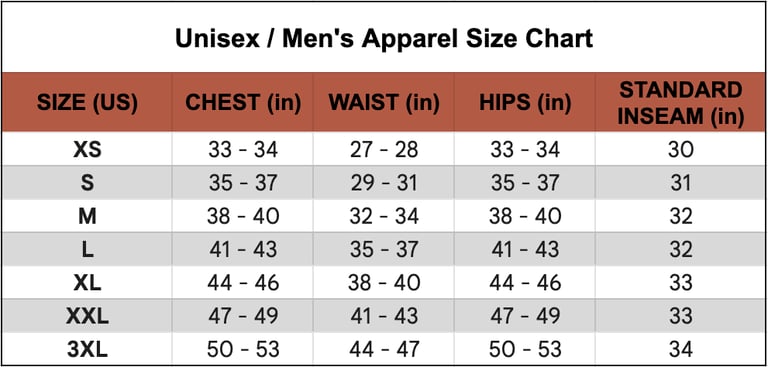
Accurate garment measurements to help you shop smarter and feel confident.
We use the 2026 ASTM Standardized Measurement Tables for a neutral, data-driven baseline.
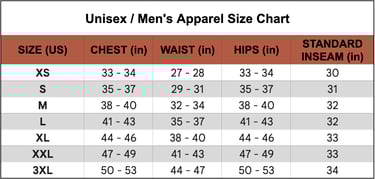
The "Vera Method" Measuring Guide
The math is only as good as the measurements. Follow these guidelines for the most accurate fit.
The Level Tape
Ensure the tape is parallel to the floor all the way around. Gravity is the enemy of accuracy.


The "Exhale" Rule
Always measure on a natural exhale. Holding your breath creates a measurement you can't live in.
The Tension
The tape should be snug enough to stay in place, but loose enough to slide a finger underneath.


The Natural Waist
Find your waist by leaning to the side; the crease is your "True North." Measure there and the fullest part of your hips.
Measurement Definitions
Chest / Bust: The widest point of the torso. For the most accurate fit, ensure the tape is level across your shoulder blades.
The Natural Waist: Your "True North" for fit. Find it by leaning to one side; the crease that forms is your natural waistline.
Rise: The distance from the middle of the crotch seam to the top of the waistband.
High Rise: Sits at or above the navel.
Mid Rise: Sits between the navel and the hip bone.
Inseam: The length of the inside leg, from the crotch to the bottom of the ankle. This determines where your hem will hit.
Contact
Feedback, inquiries: hello@theveramath.com
© 2026 The Vera Math. All rights reserved.
Privacy Policy & Terms
Financial Disclaimer: The content on The Vera Math is for informational and educational purposes only and does not constitute professional financial, tax, or legal advice. I am a Household CFO sharing personal experience and math-based insights; please consult with a licensed professional before making significant financial decisions.